Survey Results - Visual Data
.jpg)
.jpg)
.jpg)
.jpg)
.jpg)
.jpg)
.jpg)
.jpg)
.jpg)
Key Survey Findings
Only 4% of people expressed strong concern about water pollution
This indicates a general lack of awareness about the urgency of water pollution issues
74% of people identified plastic waste as the main pollutant
But awareness of agricultural runoff and oil spills as factors is much lower
Insufficient awareness of harmful algal blooms
Only 9% of respondents understand the severe impact of algal blooms on aquatic ecosystems
44% of people are unsure about pollution comparisons with other regions
Indicating a lack of publicly available comparative water quality data
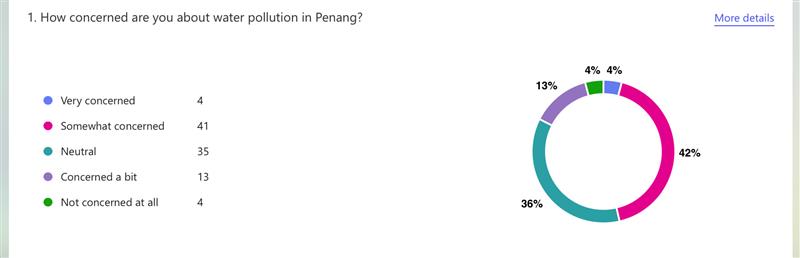
1. How concerned are people about water pollution?
Survey Results:
- Very concerned: 4%
- Somewhat concerned: 42%
- Neutral: 36%
- Concerned a bit: 13%
- Not concerned at all: 4%
Knowledge Gap: Only a small percentage (4%) are deeply concerned, which indicates a lack of urgency regarding the issue.
Solution: More awareness campaigns highlighting the severe impact of water pollution on health and the environment.
2. What are the main causes of water pollution?
Survey Results:
- Plastic waste and littering: 74%
- Household waste & sewage: 61%
- Industrial waste disposal: 53%
- Agricultural runoff: 22%
- Oil spills & shipping activities: 36%
Knowledge Gap: Many respondents overlook the role of agricultural runoff and oil spills, which are major contributors.
Solution: Education on how fertilizers, pesticides, and oil spills contribute to water pollution and ways to minimize them.

Plastic Pollution
Plastic waste is the most frequently mentioned source of water pollution by respondents

Water Pollution
Pollutants lead to water quality degradation, affecting ecosystem balance
.jpg?width=775&height=436&name=Causes%20of%20Lake%20Pollution%20Blog%20(4).jpg)
Cleanup Efforts
Community participation in cleanup activities is an important part of the solution
3. How does water pollution impact marine life?
Survey Results:
- Reduces oxygen levels, leading to fish deaths: 12%
- Causes harmful algal blooms: 9%
- Leads to bioaccumulation of toxins: 22%
- All of the above: 56%
Knowledge Gap: Harmful algal blooms are severely underrecognized despite their devastating effects on aquatic ecosystems.
Solution: Promote research and data on algal bloom incidents and how they relate to fertilizer use & climate change.
4. How does water pollution affect the economy?
Survey Results:
- Loss of tourism revenue: 2%
- Damage to fisheries and marine life: 27%
- Increased government spending on water treatment: 7%
- All of the above: 60%
Knowledge Gap: People underestimate the economic impact on government spending and tourism.
Solution: Case studies on how water pollution leads to lower tourism numbers and higher water treatment costs.
5. What actions is the government taking?
Survey Results:
- Implementing stricter laws: 21%
- Conducting river clean-up initiatives: 14%
- Promoting awareness & education: 15%
- All of the above: 49%
Knowledge Gap: Public participation in clean-ups is low.
Solution: Encourage volunteer programs for river and coastal clean-ups.
6. How does Penang compare to other regions?
Survey Results:
- Worse due to urbanization: 23%
- Similar to other coastal states: 24%
- Better due to regulations: 9%
- Not sure: 44%
Knowledge Gap: 44% are unsure, meaning there is a lack of comparative data available.
Solution: Publish reports comparing Penang's water quality to other Malaysian states.
7. How confident are people in their knowledge?
Survey Results:
- Very confident: 2%
- Somewhat confident: 42%
- Not very confident: 26%
- Don't know much: 30%
Knowledge Gap: Low confidence in water pollution knowledge among the general public.
Solution: Educational programs in schools and workplaces on water pollution issues.